
Article
How Aluminium Milk Cans Helped Power India's Dairy Revolution
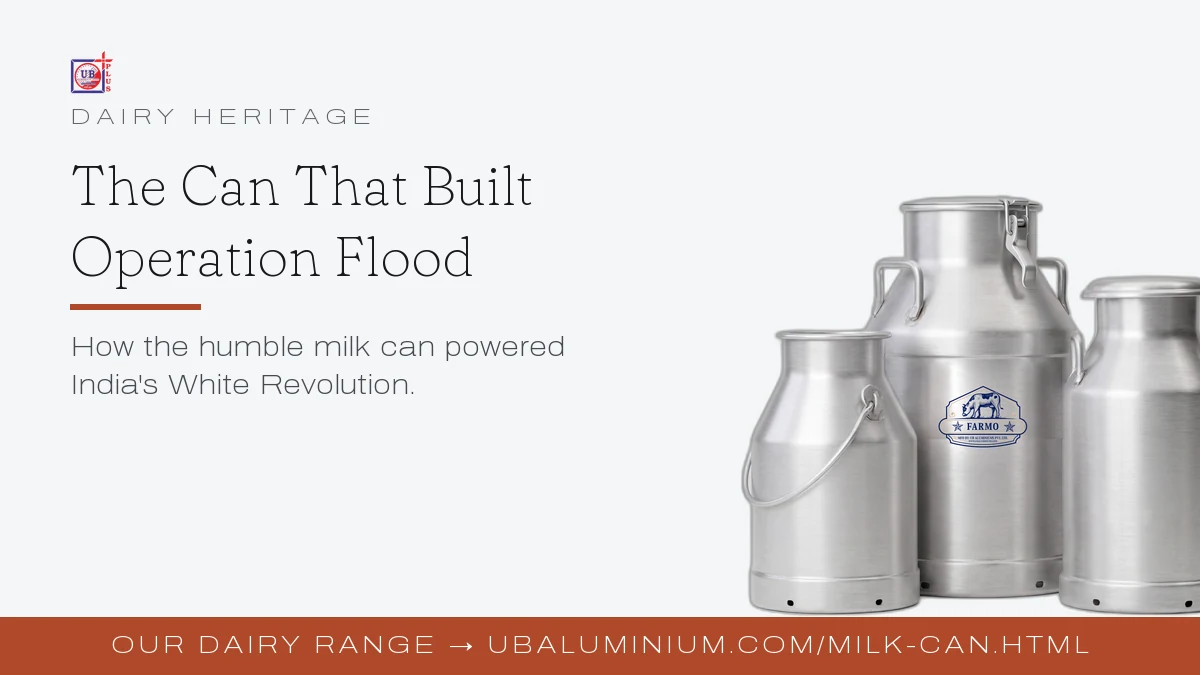
Long before bulk milk coolers and refrigerated tankers, India's dairy revolution moved on one humble object: the aluminium milk can. Through the Operation Flood era that made India the world's largest milk producer, lightweight aluminium cans were how milk travelled from millions of small farmers to village collection points and on to the dairies — and that role is woven into why aluminium cans still matter today.
The dairy revolution ran on cans
Operation Flood, launched in 1970 and led by the National Dairy Development Board under Dr Verghese Kurien, built India's cooperative dairy network — the "White Revolution." Its genius was pooling milk from countless small farmers through village cooperatives. That only worked if milk could be collected, measured and moved cheaply and at scale — and the vessel that did it, farm after farm, was the milk can.
Why aluminium was the right metal for the job
- Light to carry: farmers and collectors moved cans by hand, by bicycle and by cart — weight mattered, and aluminium was far lighter than steel.
- Affordable at scale: equipping a nationwide network of small farmers meant cost per can was critical.
- Food-grade and durable: aluminium handled daily milk and daily cleaning without rusting.
- Easy to make and repair: a spun aluminium can could be produced and maintained locally.
Manufacturers across India — UB Aluminiums among them, making cans in Jagadhri since 1957 — supplied the cans that kept the collection network moving.
What changed — and what didn't
As the network matured, larger dairies moved to stainless steel cans and bulk milk coolers at big collection centres. That's a sensible evolution for high-volume, mechanised chilling. But it didn't end the aluminium can's story. For the vast number of small farmers, village routes, gaushalas and collection points where milk is still carried by hand, the aluminium can's lightness and low cost remain exactly as valuable as they were in the 1970s. The honest comparison is in our guide to aluminium vs stainless steel milk cans.
A heritage worth buying into
When you buy an aluminium milk can today, you're buying a design proven across half a century of Indian dairying — refined, not replaced. UB Aluminiums still makes food-grade aluminium milk cans for dairies, cooperatives and farmers across India, factory-direct from Jagadhri. Talk to a maker that's been part of this story since 1957.
FAQs
What role did milk cans play in Operation Flood?
Aluminium milk cans were how milk was collected and moved from millions of small farmers to village collection points and dairies during India's dairy revolution — cheap, light and scalable enough to equip a nationwide cooperative network.
Why was aluminium used for milk cans in India?
Aluminium was light enough to carry by hand and bicycle, affordable enough to deploy at huge scale, food-grade, and easy to make and repair locally — exactly what a farmer-based collection network needed.
Are aluminium milk cans still used today?
Yes. While large mechanised dairies moved to stainless steel and bulk coolers, aluminium cans remain ideal for small farmers, village routes, gaushalas and collection points where milk is carried by hand.
Explore Our Aluminium Range
Quality aluminium utensils, manufactured in India since 1957.
View Products