
Article
Aluminium vs Stainless Steel Milk Cans: Which Is Right for Your Dairy?
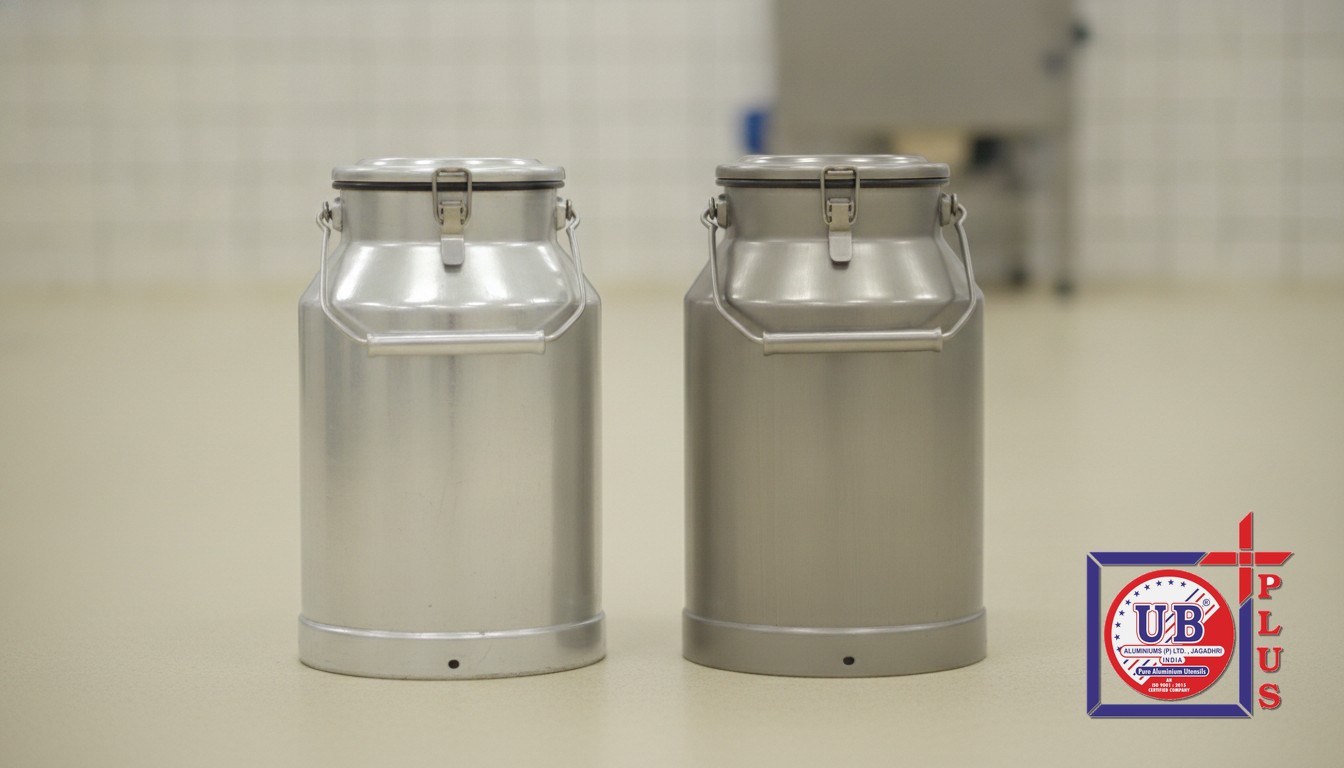
Sourced from dairy equipment discussions on Reddit, including threads on stainless vs other metals in r/dairyfarming.
For most working dairies, aluminium milk cans are the better everyday choice, and stainless steel suits fixed storage and the strictest hygiene rules. Aluminium is lighter to lift and carry on a route, heats and cools faster, and costs much less. Stainless steel is heavier and dearer, but it is extremely tough and the easiest to sanitise to a high standard. Here is how to pick, from a milk can manufacturer working in Jagadhri since 1957.
Quick comparison
| Aluminium | Stainless steel | |
|---|---|---|
| Weight (empty) | Light | Heavy |
| Cost | Lower | Higher |
| Heat and cooling speed | Faster | Slower |
| Dents | Softer, needs heavy gauge | Very resistant |
| Best for | Collection and transport on a route | Fixed storage, strict hygiene |
Why most dairies pick aluminium for the route
On a collection round the can is lifted, carried and loaded many times a day. Aluminium is a fraction of the weight of steel when empty, which saves the person doing the lifting and makes a full can easier to handle. It also heats and cools faster, which helps when you are chilling milk. And because it costs less, you can buy the sizes and numbers a route actually needs. Milk is not acidic, so it does not react with aluminium, which is why aluminium cans have been the dairy standard for generations. Our aluminium milk cans are built for this daily handling.
When stainless steel is worth the extra
Steel resists dents and lasts a very long time, and its surface is simple to sanitise to a high standard, so it suits fixed storage, chilling units and operations under the strictest hygiene audits. The trade-off is weight and cost. Many dairies keep steel for storage at the centre and aluminium for carrying milk in and out.
Does gauge close the gap?
Largely, yes. A thin aluminium can dents at the rim and base, but a heavy-gauge can keeps its shape and seals for years. If you choose aluminium, buy the heaviest gauge your budget allows, and you remove most of the durability gap with steel while keeping the lower weight and price.
Frequently asked questions
Is aluminium or steel better for a milk can?
Aluminium is better for carrying milk on a route because it is lighter and cheaper and cools faster. Steel is better for fixed storage and the strictest hygiene. Many dairies use both.
Do aluminium milk cans react with milk?
No. Milk is not acidic, so it does not react with aluminium. That is why aluminium has been the dairy standard for decades.
Are aluminium cans easy to dent?
Thin ones are. A heavy-gauge aluminium can resists denting and lasts for years, so judge a can by its weight and feel.
Do you supply milk cans wholesale and for export?
Yes. We manufacture aluminium milk cans under our FARMO line in a range of sizes and gauges. Send us your requirement for a quote.
Choosing cans for your dairy?
Tell us your route, your daily volume and how the cans are handled, and we will recommend the right metal, size and gauge. We have manufactured aluminium utensils in Jagadhri since 1957 and are ISO 9001:2015 certified. Contact us for wholesale and export enquiries.
Explore Our Aluminium Range
Quality aluminium utensils, manufactured in India since 1957.
View Products