
Article
Switching Away From Non-Stick? What Commercial Kitchens Use Instead
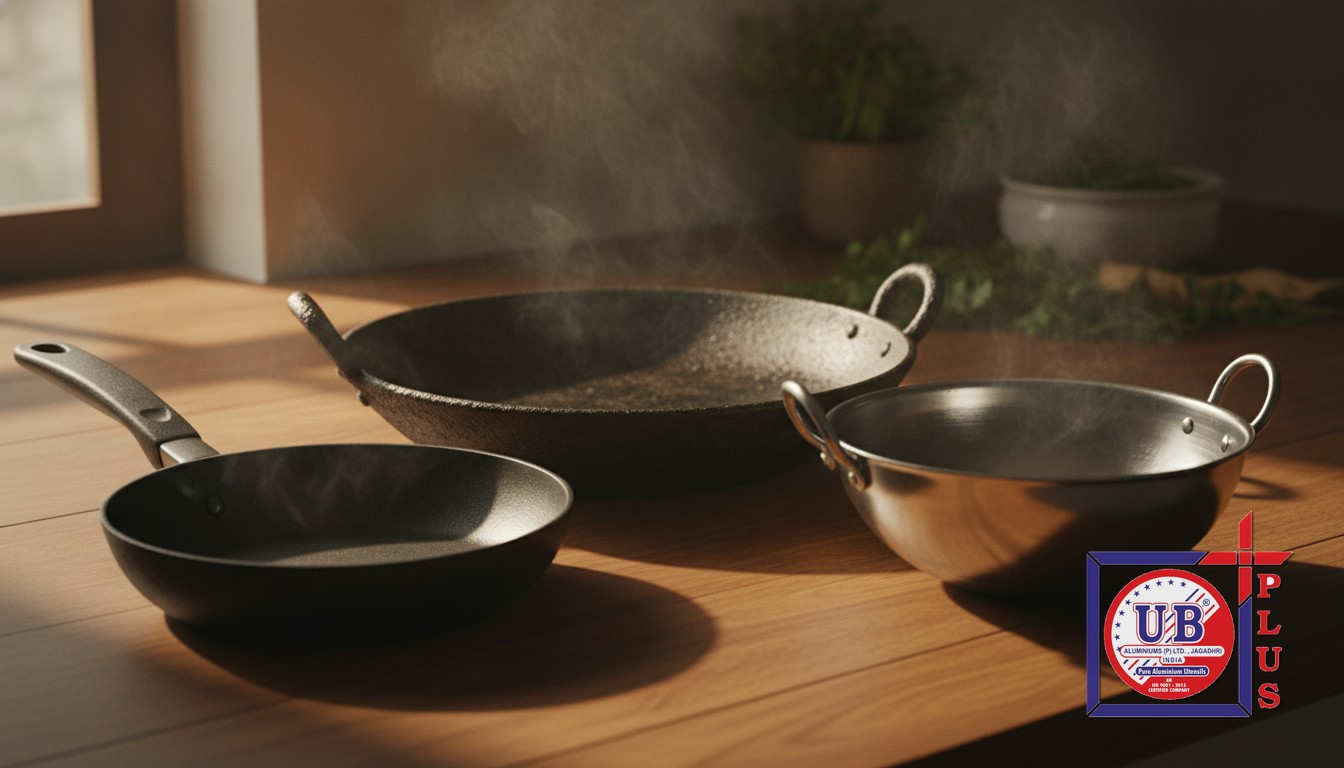
If your non-stick pans are scratched, flaking or just worn out, the good news is that the cookware professional kitchens have relied on for generations is also the honest replacement: aluminium, hard-anodised aluminium and cast iron. None of them carry a coating that wears off into your food, all of them last for years, and all of them cost less over time than replacing non-stick every two or three years. Here is how to choose, from a utensil manufacturer working in Jagadhri since 1957.
Why people move away from non-stick
Non-stick coatings are fine when they are new and undamaged, but they have a short working life. Once the surface is scratched by a steel spoon or scrubbed with harsh wool, it starts to wear, and most makers suggest replacing a non-stick pan every two to four years. An empty non-stick pan left on a high flame can also overheat quickly. For a busy kitchen cooking all day, that short life and constant replacement is the real cost.
What commercial kitchens use instead
Three materials do the bulk of the work in professional kitchens, and each has a clear job.
Plain aluminium
For boiling, frying, rice, milk and large batches, plain aluminium is fast, light and affordable. It has no coating to fail, and a heavy-gauge vessel lasts for years. Season it with use and it develops a natural grey layer that helps food release. This is the everyday metal behind most of our topes, kadais and handis.
Hard-anodised aluminium
Hard-anodising seals the surface into a hard, non-reactive layer. It gives you some natural release and a tougher surface than plain aluminium, without a coating that peels. It is a good single-pan choice for mixed cooking.
Cast iron
For dosa, chapati, eggs and shallow frying, a well-seasoned cast iron or iron tawa gives a natural non-stick surface that improves with age. It is heavy and needs seasoning, but it lasts a lifetime and adds a little dietary iron.
How to replace a non-stick pan without losing the easy release
- Match the pan to the job. Use aluminium or anodised for most cooking, and keep a seasoned iron tawa for dosa, eggs and roti.
- Season it. Heat a little oil into a new aluminium or iron vessel before first use, and let the surface build up with cooking rather than scrubbing it bare each time.
- Preheat and add oil before the food. Most sticking comes from a cold pan or a dry surface, not from the metal.
- Use the right utensils. Wooden or steel tools are fine on aluminium and iron, which is a relief after years of guarding a delicate coating.
- Buy heavy gauge. Thicker metal heats evenly and resists warping, which also helps food release.
Is uncoated cookware healthy?
Yes, within normal use. Seasoned aluminium and iron have no coating to break down. For aluminium, the only care point is to avoid long, slow cooking of very sour food in a bare, pitted pan, and to keep a steel or anodised vessel for those dishes. We cover aluminium safety in more detail on our blog.
Frequently asked questions
What is the healthiest replacement for non-stick?
Seasoned cast iron for frying and flatbreads, and plain or hard-anodised aluminium for everything else. None of these rely on a coating that wears off.
How often do non-stick pans need replacing?
Usually every two to four years, sooner if the surface is scratched. Aluminium and iron, cared for well, last many years.
Will food stick to aluminium?
Much less than people expect once the pan is seasoned, preheated and oiled. For the stickiest jobs like dosa, use a seasoned iron tawa.
Do you sell these for commercial use?
We manufacture aluminium utensils in heavy commercial gauges and can advise on the right vessel for each job. Send us your requirements for a wholesale quote.
Replacing your non-stick stock?
If you are re-equipping a kitchen away from non-stick, tell us what you cook and in what volume. We will suggest durable aluminium vessels and gauges, and we supply wholesale across India and for export. Contact us for a quote.
Explore Our Aluminium Range
Quality aluminium utensils, manufactured in India since 1957.
View Products