Article
Is Aluminium Cookware Safe? An Honest Guide for Indian Commercial Kitchens
People ask us this all the time, and the honest answer is yes. For the cooking that actually happens in a commercial kitchen, aluminium is safe. We mean boiling water, steaming rice, simmering milk, deep-frying, and cooking biryani or dal in large batches. The amount of aluminium that can pass into food during that kind of cooking is tiny, and it sits well inside the limits the World Health Organization treats as safe for a healthy adult.
There is one case where you do need to be careful, and we will be straight about it: cooking very sour food for a long time in bare, thin, pitted aluminium. Learn that single exception and you can use aluminium with confidence for almost everything else.
We have made aluminium utensils in Jagadhri since 1957, and over three generations we have supplied wedding caterers, sweet shops, temple langars and dairies. This is the same guidance we give our own customers, with the sales talk left out.
The quick answer
Aluminium is a good choice for water, milk, rice, pulav and biryani, dal, frying and reheating. Be careful using bare aluminium for long, slow cooking of very acidic dishes like tamarind, tomato, lemon or kokum gravies, because a little metal can move into the food and dull its taste. The thing that matters most when you buy is the thickness of the metal and a clean, food-grade finish. A heavy pot is both safer and far longer-lasting than a thin, cheap one.
Why commercial kitchens run on aluminium
The biggest biryani handis, milk cans and halwai kadhais are almost always aluminium, and there are good reasons for that. Aluminium carries heat better than steel, so twenty litres of milk or rice comes up to temperature fast, without the hot spots that scorch a batch. It is light, which matters when someone is lifting a full pot a hundred times across a catering shift. And it is affordable in the large sizes commercial work needs, so you are not paying tri-ply steel prices for a vessel that mostly boils and fries.
The real safety question: sour food
Aluminium is a reactive metal. When bare aluminium sits in contact with strongly acidic food and simmers for a long time, a trace of the metal can dissolve into what you are cooking. For a quick tadka or a short boil, this is nothing to worry about. For a sour curry left to reduce for two hours in a thin, scratched pan, more can move across, and you may notice a faint metallic taste.
Two simple habits keep this well within safe limits. First, match the pot to the dish. Use aluminium for water, milk, rice, frying and non-sour gravies, and keep a lined or steel vessel for the long sour curries. Second, do not scrub a working pot back to a mirror shine every day. Aluminium builds up a dull grey layer with use, and that layer slows any reaction, so it is actually doing a job.
Plain and hard-anodised aluminium
Hard-anodised aluminium goes through an electro-chemical process that turns its surface into a hard, sealed layer. That layer is part of the metal itself, and it strongly resists reacting with sour food. So anodised vessels are the answer when you want aluminium's lightness but cook acidic dishes often. Plain, uncoated aluminium stays the economical everyday choice for the high-volume, non-acidic cooking that makes up most commercial output, and it has the advantage of being easy to clean and to check for wear.
Why thickness matters more than it looks
The biggest difference between a utensil you trust for years and one that fails early is gauge, the thickness of the metal. Thin aluminium dents, then pits, and those pits are exactly where reaction and off-flavours collect. Heavy, food-grade aluminium stays flat, holds up to a high flame without warping, and wears down evenly. When you buy by weight and feel rather than by the lowest sticker price, you are buying safety and years of use at the same time.
Using aluminium safely: a short checklist
- Use aluminium for water, milk, rice, frying and non-sour gravies. Keep a steel or lined pot for the long sour curries.
- Do not store cooked food, especially salty or sour food, in aluminium overnight. Move it to steel or food-grade storage.
- Let a new vessel build its grey surface layer. It is protective, not dirty.
- Clean with a soft scrub. Harsh steel wool gouges the surface and starts the pitting you want to avoid.
- Retire any pot that is deeply pitted, cracked or badly warped.
- Buy heavy gauge and a food-grade finish from a maker you can name.
When aluminium is the right pick
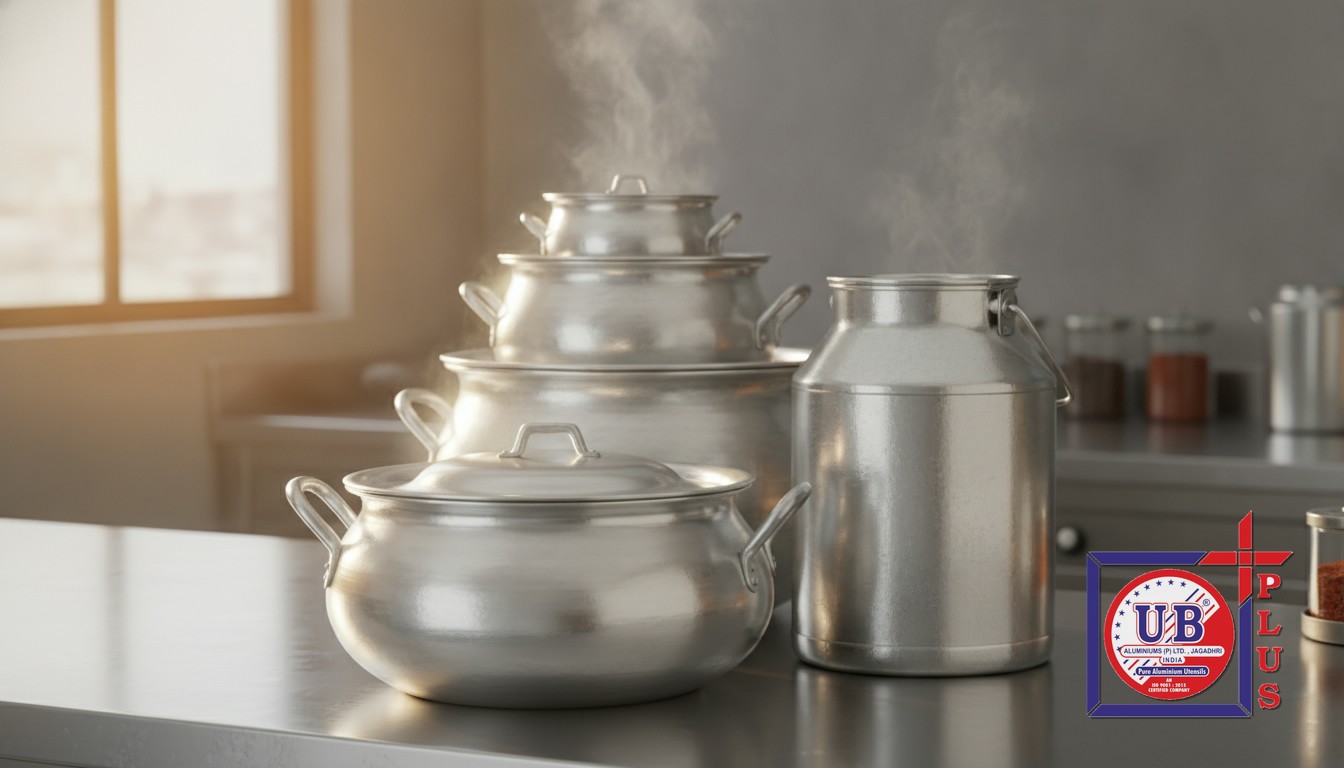
For a dairy boiling and carrying milk, a halwai boiling sugar syrup and frying jalebi, a caterer cooking rice and biryani for five hundred guests, or a langar kitchen running all day, aluminium's speed, light weight and price are hard to beat, and the sour-food caveat rarely comes up. That is the exact work our aluminium patila, bhagona, biryani handi, stock pots and milk cans are built for.
Common questions
Is it safe to boil milk in an aluminium can or pot?
Yes. Milk is not acidic, and boiling is quick and hot. Aluminium milk cans and pots have been the commercial standard for this job for decades, because they heat fast, heat evenly, and are easy to carry.
Does aluminium cookware cause health problems?
Food-safety bodies, including the WHO, have found that the aluminium you absorb from cookware in normal use is far below the weekly intake considered safe for a healthy adult. The practical advice is simply to avoid long-simmering very sour food in bare, pitted aluminium.
Aluminium or steel for commercial cooking?
They are different tools, not better or worse. Aluminium wins on heat, weight and price for high-volume, non-acidic cooking. Steel wins for long sour curries and overnight storage. Most working kitchens keep both and use each for what it does well.
What thickness should I buy?
For commercial use, buy the heaviest gauge your budget allows. Heavier metal resists warping and pitting, cooks more evenly, and lasts years longer, so it costs less over the life of the pot.
How we make aluminium you can trust
Safe aluminium cookware starts at the factory, with food-grade alloy, honest thickness, clean finishing and steady quality checks. We have made utensils in Jagadhri, Haryana since 1957, and we are ISO 9001:2015 certified. If you run a kitchen, dairy or sweet shop and want vessels built to be used hard for years, write to us for wholesale and export enquiries, and we will help you pick the right vessel and gauge for your work.
Explore Our Aluminium Range
Quality aluminium utensils, manufactured in India since 1957.
View Products