
Article
How to Choose an Aluminium Milk Can: Size, Gauge & Care
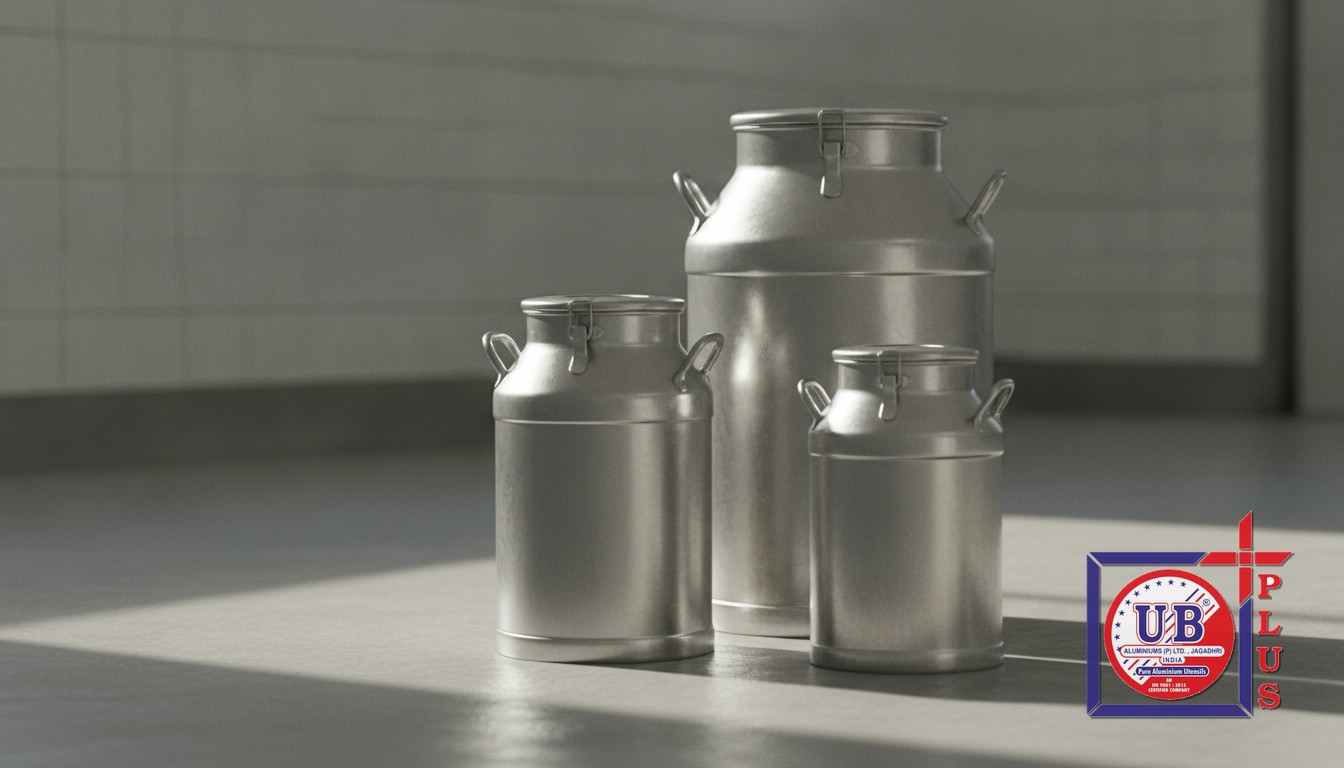
To choose an aluminium milk can, you mainly need to get three things right: the capacity for your daily volume, a heavy enough gauge to survive transport, and a tight, food-grade lid. Aluminium is the standard for milk cans because it heats fast, stays light when full, and does not react with milk, which is not acidic. We make aluminium milk cans in Jagadhri under our FARMO line, and this is the guidance we give dairies and collection centres.
What size milk can do you need?
Pick capacity from how much milk you move per trip, and leave a little headroom so the can is not filled to the brim.
- Small dairy or household collection: 5 to 20 litres, easy for one person to carry.
- Mid-size collection and delivery: 20 to 40 litres, the common round for routes and shops.
- Bulk transport: 40 to 50 litres and above, usually moved with a trolley or two people.
If you run a route, a mix of sizes is often better than one large can, because partly filled large cans are heavy and let milk move around.
Why gauge matters for a milk can
A milk can is handled hard. It is lifted, set down, loaded and unloaded many times a day, so gauge, the thickness of the aluminium, decides how long it lasts. A thin can dents at the rim and base and starts to leak at the seams. A heavy-gauge can keeps its shape, seals properly and lasts for years. For daily commercial use, choose the heaviest gauge your budget allows.
Is it safe to store and boil milk in aluminium?
Yes. Milk is not acidic, and both boiling and short-term storage are well within safe use for aluminium. This is why aluminium cans and pots have been the dairy standard for decades. For long cooking of sour foods you would choose steel or anodised, but for milk, aluminium is the right metal.
What to look for in a good milk can
- Tight, secure lid: a well-fitting lid with a clamp or lock keeps milk clean and prevents spills in transport.
- Strong handles and rim: the parts that take the load should be reinforced and well finished.
- Smooth food-grade interior: a clean inner surface is easy to wash and keeps milk fresh.
- Even seams: good welding and finishing at the base and seams prevent leaks.
- Honest gauge: judge weight by hand; a quality can feels solid, not flimsy.
How to care for an aluminium milk can
Wash it after every use with a soft brush and let it dry fully before the lid goes on, so no moisture sits inside. Avoid harsh steel wool, which scratches the surface. Let the natural grey layer build up rather than polishing it bare each time. Retire any can that is cracked, badly dented or leaking at a seam.
Frequently asked questions
What size milk can is best for a small dairy?
For one person carrying milk, 5 to 20 litres is comfortable. For routes and shops, 20 to 40 litres is common. Leave a little headroom rather than filling to the top.
Is aluminium good for milk cans?
Yes. Milk is not acidic, and aluminium heats fast and stays light, which is why it is the dairy standard. Choose a heavy gauge and a tight lid.
How long does an aluminium milk can last?
A heavy-gauge can, cared for well, lasts many years. Thin cans fail at the rim and seams much sooner.
Do you supply milk cans wholesale and for export?
Yes. We manufacture aluminium milk cans under our FARMO line in a range of sizes and gauges, and we supply wholesale across India and export to several countries. Send us your sizes and quantities for a quote.
Need milk cans for your dairy?
Tell us your daily volume and how the cans will be transported, and we will recommend the right sizes and gauge. We have manufactured aluminium utensils in Jagadhri since 1957 and are ISO 9001:2015 certified. Contact us for wholesale and export enquiries.
Explore Our Aluminium Range
Quality aluminium utensils, manufactured in India since 1957.
View Products