Article
How to Clean a Milk Can: What r/CleaningTips and Dairy Farmers Recommend
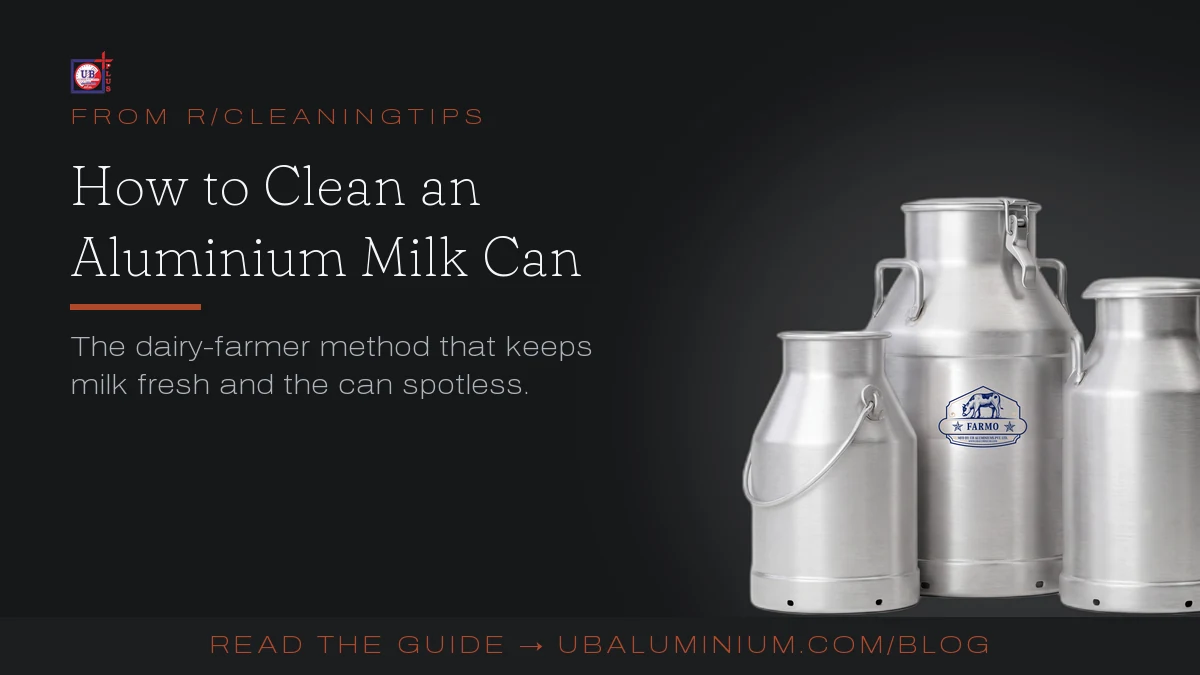
The advice that keeps coming up on Reddit's r/CleaningTips and in dairy-farming communities is remarkably consistent: wash promptly with warm water and mild soap, lift milkstone with vinegar or a baking-soda paste, use a soft nylon pad — never coarse steel wool — and dry the can completely. Done after every use, that routine stops the sour smell and white "milkstone" buildup that ruins milk and corrodes cans.
What the Reddit cleaning crowd gets right
- Warm water + mild dish soap first. The universal starting point — it lifts milk fats before they set.
- Vinegar or baking soda for buildup. For the chalky white film (milkstone / milk scale), r/CleaningTips repeatedly points to a mild acid like white vinegar, or a baking-soda paste, left to work for 10–15 minutes then gently scrubbed. This dissolves dried milk proteins without eating the metal.
- Soft pads, not steel wool. The consensus — correctly — is that coarse steel wool and wire brushes scratch aluminium, trapping bacteria and stripping its protective layer. A non-scratch nylon pad is the right tool.
- Dry it fully. Threads on sour smell almost always trace back to a can stored damp. Dry inside and out, store with the lid off.
Where farm experience adds to the Reddit advice
Working dairy farmers add the discipline that casual cleaners miss:
- Clean immediately, every time. Milkstone forms when residue is left to dry. A can washed within the hour almost never builds scale.
- Reach the shoulder. The inside of the can's shoulder, just under the neck, is the hardest spot to clean and where residue hides — use a brush that reaches it.
- Rinse, wash, sanitise, dry — in that order. A fixed sequence beats improvising, especially across a fleet of cans.
The method, step by step
- Empty and rinse with lukewarm water straight after use (hot water on fresh milk can bake on protein).
- Wash with warm water and mild soap using a soft pad or brush.
- For milkstone, apply vinegar or a baking-soda paste, wait 10–15 minutes, scrub gently, rinse.
- Sanitise if needed, then rinse with clean water.
- Dry completely and store with the lid off so air circulates.
Our full guide to cleaning and sanitising an aluminium milk can expands on sanitising safely.
One thing Reddit can't tell you
No cleaning routine fixes a badly built can. A thin can that's dented and gone out of round traps residue in creases no brush can reach. Starting with a well-made, food-grade can with a smooth interior makes hygiene far easier. UB Aluminiums makes food-grade aluminium milk cans with smooth interiors and wide mouths that are genuinely easy to keep clean.
FAQs
How do you remove milkstone from a milk can?
Apply white vinegar or a baking-soda paste, leave it 10–15 minutes to dissolve the dried milk proteins, then scrub gently with a non-scratch nylon pad and rinse. Avoid steel wool, which scratches aluminium.
Why does my milk can smell sour?
Almost always because it was stored damp or not cleaned promptly. Wash straight after use, dry the can completely inside and out, and store it with the lid off so air can circulate.
Can I use steel wool to clean an aluminium milk can?
No. Coarse steel wool and wire brushes scratch aluminium, strip its protective oxide layer and create crevices where bacteria hide. Use a soft nylon pad or brush instead.
Explore Our Aluminium Range
Quality aluminium utensils, manufactured in India since 1957.
View Products