Article
Aluminium vs Stainless Steel vs Hard-Anodised: Which Cookware for a Commercial Kitchen?
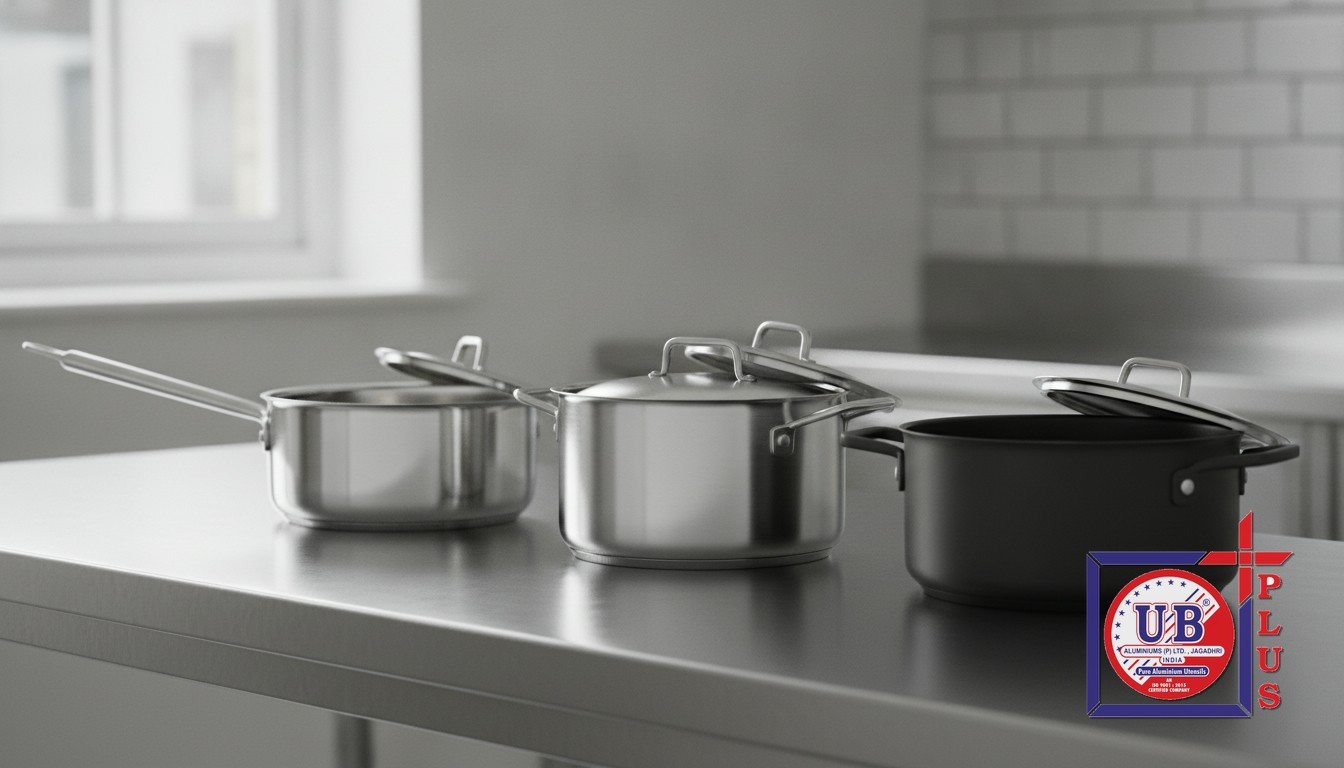
If you run a commercial kitchen, the short answer is that you do not pick one metal, you keep two or three and use each for what it does best. Aluminium is the fast, light, affordable choice for boiling, frying and large-batch cooking. Stainless steel is the choice for long sour curries and for storing food. Hard-anodised aluminium sits in between, giving you aluminium's lightness with a sealed, non-reactive surface. This guide explains when to reach for each one, from the people who have made aluminium utensils in Jagadhri since 1957.
Quick comparison
Here is how the three compare on the things that matter in a working kitchen.
| Aluminium | Stainless steel | Hard-anodised | |
|---|---|---|---|
| Heat conduction | Excellent | Fair | Very good |
| Weight | Light | Heavy | Light |
| Acidic food | Use care | Best | Good |
| Price | Lowest | Higher | Medium |
| Best for | Water, milk, rice, frying, big batches | Sour gravies, storage | Everyday mixed cooking |
When to use aluminium
Aluminium carries heat better than steel, so a large vessel of water, milk or rice heats quickly and evenly, without the hot spots that scorch a batch. It is also much lighter, which matters when a cook lifts a full pot many times a shift, and it costs less in the big sizes commercial work needs. For a dairy, a halwai, a caterer or a langar kitchen, aluminium is usually the main metal. Our aluminium topes, kadais, biryani handis, stock pots and milk cans are built for this kind of heavy daily use.
When to use stainless steel
Steel does not react with food, so it is the safe choice for long, slow cooking of sour dishes like tamarind or tomato gravies, and for storing cooked food overnight. It is heavier and slower to heat, and tri-ply steel is more expensive, but for the acidic jobs it is worth keeping a few steel vessels alongside your aluminium.
When to use hard-anodised aluminium
Hard-anodising puts aluminium through an electro-chemical process that turns its surface into a hard, sealed layer. You keep aluminium's light weight and good heat, and you gain a surface that resists reacting with sour food. If you want one metal that handles most mixed cooking, hard-anodised is a sensible middle path, though it costs more than plain aluminium and is usually meant for gas rather than induction.
Does gauge matter more than the metal?
Often, yes. Gauge is the thickness of the metal, and it decides how long a vessel lasts and how evenly it cooks. A thin pan of any metal dents, warps and develops pits. A heavy-gauge aluminium pot will outlast a thin steel one and cook better while it does. When you buy, judge by weight and feel, not only by the metal on the label.
Frequently asked questions
Which is best for an Indian commercial kitchen?
There is no single winner. Use aluminium for water, milk, rice, frying and large batches, steel for long sour curries and storage, and hard-anodised when you want one vessel for mixed cooking. Most working kitchens keep all three.
Is aluminium cheaper than steel?
Yes, especially in large commercial sizes. That is one reason halwais, caterers and dairies buy aluminium for their biggest vessels.
Can I use aluminium on induction?
Plain aluminium is not magnetic, so it needs an induction-compatible base or a disc. Tell us your stove type and we will suggest the right option.
Do you supply all three types wholesale?
We manufacture plain and finished aluminium utensils in-house and can advise on gauge and sizing for your kitchen. Send us your list for a quote.
Still deciding?
Tell us what you cook and in what volume, and we will recommend the right vessels and gauge. We have supplied wholesalers, dealers and commercial kitchens across India since 1957, and we export to several countries. Get in touch for wholesale and export enquiries.
Explore Our Aluminium Range
Quality aluminium utensils, manufactured in India since 1957.
View Products